
Heart Surgery
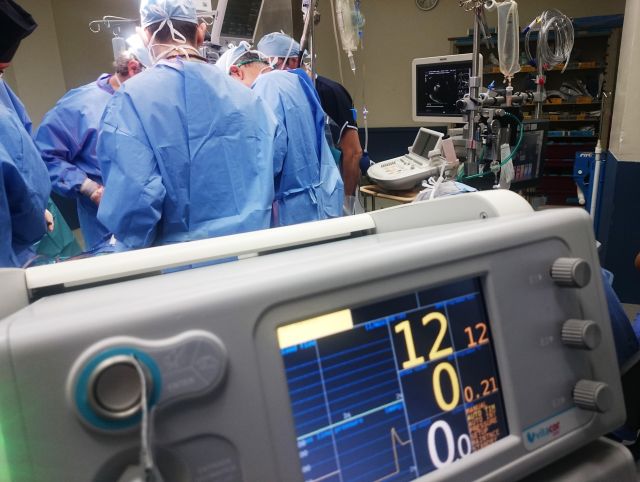
Heart surgery (cardiac surgery) is the range of operations that corrects certain heart problems when medicines or other treatments have not worked or cannot be used (MedlinePlus). It spans major operations that open the chest, such as heart bypass surgery for blocked arteries, down to smaller procedures done through a vein or a small cut under the skin, such as putting in a pacemaker (MedlinePlus). Because it treats blocked coronary arteries, damaged valves, dangerous heart rhythms and heart failure, which can be life-threatening, it sits at the high end of the risk range for operations, from some risk (a catheter through a vein) up to the riskiest operations on this site (MedlinePlus). If your symptoms are suddenly getting worse, do not wait for a planned appointment or a flight: get urgent medical care now (MedlinePlus). For planned care, this guide walks you through what happens from your first specialist visit to recovery, why each step exists, the questions to ask, and how to protect yourself if you travel.
What heart surgery is
The NHS and the US National Institutes of Health both define heart surgery as operations that fix heart problems when other treatments have not worked or cannot be used, with some operations planned well in advance and others done as an emergency (MedlinePlus).
On MedicalTourism.Review, heart surgery is grouped into families so a reader can see the full range and link down to each operation:
- Coronary bypass gets blood around a narrow or blocked coronary artery. It is the most common heart surgery in adults, and appears here in several names: Coronary Artery Bypass, Coronary Artery Bypass Grafting (CABG), Heart Bypass Surgery and the minimally invasive direct version, MIDCAB, are the same graft operation described differently (MedlinePlus).
- Heart valves repairs or replaces a damaged valve: Cardiac Valve Replacement / Reconstruction and Heart Valve Replacement Surgery cover the same ground (MedlinePlus).
- Rhythm and electrical devices treat a heart that beats too slowly, too fast or dangerously: Heart Pacemaker Procedures to steady a slow or erratic beat, an implantable cardioverter defibrillator or AICD to shock a life-threatening rhythm back to normal, and Cardiac Ablation Treatment.
- Vessels and catheters reach the heart through a blood vessel: Cardiac Catheterization Procedures and Percutaneous Coronary Angioplasty / Stenting, which opens a narrowed artery with a balloon and a stent.
- Open Heart Surgery (Open Heart Surgery) is the shared approach for bypass and valve work, done through a cut in the chest.
- Heart Transplantation (Heart Transplantation) replaces a failing heart with one from a deceased donor, used when nothing else works.
- Patent Ductus Arteriosus (PDA) (Patent Ductus Arteriosus PDA) is a childhood heart condition in which a vessel that should close after birth stays open, listed here for completeness.
How heart surgery works
The pathway runs in time order, and the same stages apply whether you are treated at home or abroad.
You begin with a cardiology contact and diagnosis. The doctor uses an echocardiogram (an ultrasound of the heart), an ECG (a recording of the heart's electrical signals), and tests such as coronary angiography, an invasive test that evaluates the heart arteries under X-ray, or a stress test (MedlinePlus).
Next is decision and informed consent. Depending on the problem you choose between options: bypass versus a stent versus medicine for blocked arteries; valve repair versus replacement, or a catheter procedure, for a damaged valve. You are entitled to ask which option the doctor recommends and why, and to understand what happens if you do nothing (NHS).
On the day, open-heart surgery is done under a general anaesthetic, the surgeon cuts down the centre of the chest through the breastbone (a sternotomy), and the heart is connected to a heart-lung bypass machine that keeps blood flowing around the body while the operation is done (NHS). A breathing tube is passed into the windpipe and a ventilator breathes for the patient while they are asleep (Guys and St Thomas NHS). Smaller procedures, such as fitting a pacemaker, take about an hour under local anaesthetic with the patient awake (NHS).
The first hours and days after surgery are spent in the intensive care unit (ICU) or a high-dependency unit: a breathing tube, monitors, drains, pain relief and medicine to prevent blood clots, before moving to a ward (NHLBI). Recovery time differs by family: bypass takes about six to twelve weeks (NHLBI), a heart valve replacement about two to three months (NHS), a pacemaker usually a day case or an overnight stay with full recovery in a few weeks to months (NHS), angioplasty about a week (MedlinePlus), and ablation usually going home the same day or staying one night for heart monitoring (MedlinePlus). If you are planning care across a border, timing matters: assessment, the ICU stay and follow-up all have to fit your travel plan, and the ICU days are the part that is hardest to compress.
Who it is for, and when not to wait
Heart surgery suits people with a serious, often life-threatening heart condition where an operation changes survival or symptoms: blocked coronary arteries needing a stent or bypass, a damaged or leaky valve needing repair or replacement, a dangerous or drug-resistant heart rhythm needing a pacemaker, defibrillator or ablation, and heart failure needing a device (MedlinePlus). It is not for everyone. People who are too frail or carry other high-risk conditions may be poor candidates, and milder conditions are often first managed with medicines and monitoring (MedlinePlus).
For needed care, the cost of delay is real, and it is as serious as the operation itself:
- Severe aortic stenosis (a narrowed valve that forces the heart to pump harder) left untreated carries about a 21% one-year and 56% five-year mortality, with cardiac death making up around 90% of those deaths (Korean Circulation Journal).
- Heart failure has no cure; even with treatment it usually gets worse over time, so treatment is usually lifelong, and a transplant is considered only when the condition is life-threatening and nothing else is helping (MedlinePlus).
- Untreated coronary artery disease, the most common heart disease and a leading cause of death, can lead to angina, heart attack, heart failure and arrhythmia over time (MedlinePlus).
- Mitral valve regurgitation, where blood leaks backward through the mitral valve, forces the heart to pump harder and may lead to congestive heart failure if untreated (MedlinePlus).
The NHS says this for severe valve disease: surgery is recommended even when you are not yet having symptoms, because it prevents the condition getting worse and leading to heart failure (NHS). For severe valve disease the risks of surgery are lower than the risks of not treating your condition (NHS).
Learn the warning signs that mean do not wait. Chest pain or discomfort that does not go away or happens while you are resting may be a heart attack, so get emergency help right away and call your local emergency number (MedlinePlus). The NHS lists, for valve disease, sudden chest pain that spreads to the arms, back, neck or jaw or lasts more than 15 minutes, struggling to breathe, or chest pain with breathlessness or palpitations (NHS). Aortic stenosis symptoms, chest discomfort on exertion, fainting or dizziness with activity and becoming easily tired, mean a doctor should be seen and strenuous activity should be avoided (MedlinePlus).
If you are weighing care abroad: for an urgent or unstable heart condition, the first question is whether travelling is wise at all before any of this. Never travel while symptoms are worsening.
How to prepare
Careful preparation helps you recover more smoothly. Every item serves a purpose:
- Gather your records and get them translated to English. Bring your diagnosis, test results, imaging and medication list so the overseas team can see your history without a language gap, and so your home doctor can follow up with the same documents.
- Plan ahead and buy the right insurance. Arrange your appointment at least 4 to 6 weeks before you travel, and buy travel insurance that covers medical care overseas and emergency evacuation, since standard domestic policies rarely cover full emergency costs abroad (CDC).
- Confirm who continues your care at home. Know which doctor will follow up, and who treats and pays for a late problem once you are back, so a delayed issue does not become an insurance dispute.
- Write your questions down. Jotting them before the meeting means you get the answers you need instead of forgetting them in the moment. You can say these exact words to your surgeon:
- "Are there any options other than surgery, and what do you recommend for me?" (NHS)
- "Are there any side effects or risks? If so, what are they?" (NHS)
- "How long will the treatment last, and what will happen if I do not have treatment?" (NHS)
- "How experienced is your team with this exact operation, and what happens if something goes wrong in the first hours after surgery?"
What to expect, risks and recovery
The decision has two sides, and both deserve equal weight.
The benefits. Bypass surgery can reduce the risk of further heart attacks, improve the function of the heart muscle and stop further episodes of angina (Guys and St Thomas NHS). A heart valve replacement prevents valve disease getting worse and leading to heart failure, and is usually very successful (NHS). A pacemaker keeps a slow or irregular heartbeat steady, an implantable cardioverter defibrillator (ICD) detects a dangerous rhythm or cardiac arrest and sends an electric charge to restore a normal heartbeat, and angioplasty opens a narrowed artery so more blood gets through (NHLBI; MedlinePlus).
What can go wrong with the operation. These vary by family, and at this level of surgery you should hear them:
- Bypass (CABG). You will stay in the ICU for a day or two, then need about six to twelve weeks to recover fully (NHLBI). The graft can later become blocked with plaque and limit blood flow, which may cause a heart attack and require additional surgery or a stent (NHLBI).
- Valve surgery. A heart valve replacement is a major operation that has risks: chest-wound infection, bleeding, an irregular heartbeat that may need a pacemaker, kidney problems, and blood clots or stroke (NHS). A mechanical valve needs lifelong anticoagulant medicine (usually warfarin) to prevent blood clots, and that can cause more bleeding than usual; most replacement valves last 15 to 20 years, or longer if mechanical, but can fail and need further surgery to replace the valve again (NHS).
- Pacemaker. Fitting can be followed by an infection, so contact the clinic if the wound gets worse, leaks fluid or you develop a high temperature (NHS).
- Ablation. The most undesirable complications are atrio-oesophageal fistulae, pulmonary vein stenosis, cardiac tamponade, stroke and phrenic nerve injury, and long-term safety and efficacy data are limited (Thorax).
- Angioplasty. It is generally safe but carries risks of a bruise or bleeding where the catheter entered, and, more rarely, serious bleeding, blood clots and narrowing of the artery again (MedlinePlus).
The risks of waiting are covered above: untreated severe aortic stenosis about 21% at one year and 56% at five, heart failure that progresses even with treatment, and untreated coronary disease moving toward heart attack and heart failure (Korean Circulation Journal; MedlinePlus).
What is known and not known. Heart transplant, offered when heart failure is life-threatening and nothing else works, has survival of 85% to 90% one year after surgery, which is a real figure but still leaves one in eight or more not surviving that first year (NHLBI). Ablation outcomes are less certain long term. And none of these figures is a guarantee: your own result depends on the exact condition, its stage and your overall health.
Finding heart surgery abroad on MTR
Travelling for heart surgery is a bigger step than travelling for a routine procedure, so the checks are heavier:
- On-site emergency capability is a must-ask. For an operation at this level, confirm the hospital has an ICU, a blood bank on site, and cardiac surgeons available around the clock — the minimum for open-heart surgery. Do not book at a facility without these.
- Flying after surgery raises clot risk. Flights longer than four hours increase the risk of blood clots, including deep vein thrombosis and pulmonary embolism, so plan how and when you fly home after limited mobility following a cardiac procedure (CDC; CDC).
- Insurance and evacuation. Buy travel insurance that covers medical care overseas and emergency evacuation, because a complication back home must be treated by your home team and paid by the right policy (CDC).
- Continuity of care. Keep your home specialist informed, arrange follow-up with a team near home, and never travel while symptoms are worsening.
To begin comparing providers, look at the directory of surgery providers abroad, browse the Surgery and Cardiology hubs for related care, and read our practical guides on top medical tourism destinations worldwide and US medical tourism.
This week, write down your questions, gather your records and scans, and discuss your heart condition and its options with your doctor.
Medical disclaimer: This information is for general educational purposes and is not medical advice. Always consult a qualified healthcare professional about your individual situation.
Reviewed against authoritative medical sources (MedlinePlus, the US National Library of Medicine; the National Heart, Lung, and Blood Institute, US National Institutes of Health; NHS England; the US Centers for Disease Control and Prevention; Guys and St Thomas NHS Foundation Trust; Thorax, the British Medical Journal; and the Korean Circulation Journal).
Last reviewed: 20 November 2026
Providers that provide Heart Surgery Service
| Providers | Score | Reviews | Location |
|---|---|---|---|
| Lokman Hekim Health Group |
89.31 |
32 | Turkey |
| Medpark International Hospital |
87.82 |
11 | Moldova |
| Alverna Dental Studio |
87.16 |
2 | Romania |
| Sinaiclinic Hospital |
87.16 |
2 | Egypt |
| Hair Transplant Institute - Dr. Alba Reyes |
84.18 |
2 | Dominican Republic |
| Assuta Hospital |
83.77 |
1 | Israel |
| International Modern Hospital |
83.77 |
1 | United Arab Emirates |
| Central Clinic Of Athens |
83.77 |
1 | Greece |
| Eurokliniki |
83.77 |
1 | Greece |
| Spire Elland Hospital |
83.77 |
1 | United Kingdom |
| St Luke’s Hospital |
83.77 |
1 | Philippines |
| St. Constantin |
83.77 |
1 | Romania |
| Jewish General Hospital |
82.68 |
2 | Canada |
| Clinica Hospital Angel Del Mar |
80.94 |
1 | Mexico |
| Royal Berkshire Hospital |
79.05 |
1 | United Kingdom |
| Maria Heimsuchung Caritas Klinik Pankow |
76.22 |
1 | Germany |
| Barnaclinic |
58.28 |
1 | Spain |
| Cairo Plastic Clinic |
57.33 |
1 | Egypt |
| American Hospital Istanbul |
57.29 |
2 | Turkey |
| PSG Hospitals |
53.56 |
2 | India |