
Anesthesiology / Anaesthesiology
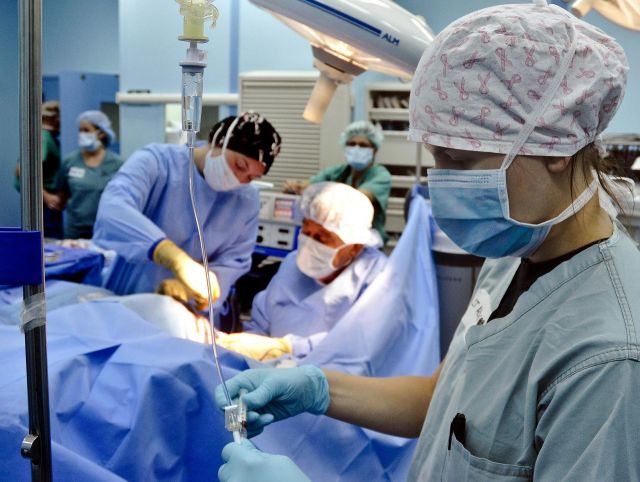
Anesthesiology, spelled anaesthesiology in British English and much of the world, is the medical specialty that keeps a patient pain-free, safe and stable before, during and after a procedure (Australian Society of Anaesthetists). Its specialists are perioperative physicians, meaning doctors who care for patients around the time of surgery: they assess patients before their procedures and play an important role in caring for the patient before, during and after (Australian Society of Anaesthetists). Depending on the country, this specialist is known as an anesthesiologist, an anaesthesiologist or an anaesthetist; all three names describe the same doctor (Australian Society of Anaesthetists).
The word anaesthesia comes from Greek meaning "without sensation." It stops pain and, in general anesthesia, places the patient into a state of carefully controlled unconsciousness so they are unaware and feel nothing (Australian Society of Anaesthetists). Anaesthesia is not a procedure in its own right. It is the care that makes operations, endoscopy and other long, complex or painful procedures possible and tolerable. Anesthesiologists also provide pain relief for acute or chronic pain and resuscitation of acutely unwell patients (Australian Society of Anaesthetists).
If you suddenly feel unwell around a procedure, with chest pain, trouble breathing, heavy bleeding or confusion, go to the nearest hospital emergency department now, at home or abroad; do not wait for a planned appointment or a flight. For planned care, this page walks you through what anesthesia involves from the first pre-operative visit to recovery, what to expect afterward, and what to check before booking it abroad.
What anesthesiology is
Anaesthesia comes in families, and the team picks one to suit your procedure (NHS):
- General anesthesia puts you into a deep sleep-like state so you do not feel pain during surgery (MedlinePlus). It is used when the other types are not suitable (NHS).
- Regional anesthesia numbs a whole area of your body while you stay awake, for example a spinal or an epidural (NHS).
- Local anesthesia is a medicine given to numb an area of your body, so you are awake but feel no pain during an operation or procedure (NHS).
- Sedation, sometimes called conscious sedation, relaxes you without making you unconscious (NHS).
- Pain management covers relief of acute or chronic pain; anesthesiologists also resuscitate acutely unwell patients (Australian Society of Anaesthetists).
The anesthesiologist's work sits next to several other services on this site: surgery is the operation that anesthesia supports, the pre-operative assessment is the first contact, diagnostics, pathology and radiology cover the blood tests and imaging that show whether you are well enough for anesthesia, and the consultation or check-up follows up on recovery.
How anesthesiology works
Your pathway starts a few weeks before the procedure with a pre-operative assessment, an appointment meant to make sure you are well enough for both the procedure and the anesthesia (NHS). The checkup usually needs to be done within the month before surgery, which gives providers time to treat any medical problems you may have first (MedlinePlus). It may involve blood tests, such as a complete blood count and kidney, liver, blood sugar and clotting tests, an electrocardiogram (ECG) to check your heart and a chest X-ray (MedlinePlus). You may also meet the anesthesiologist who will give the anesthesia, and you should tell the team about any medicines you take, any health conditions, and any allergic reaction you have ever had to anesthesia or another medicine (NHS).
You then agree with the anesthesiologist on which type of anesthesia you will have. Their job spans the whole period: they evaluate you before the procedure, form a plan for your care during and after the anesthesia, monitor and support you during it, and supervise care afterwards (Australian Society of Anaesthetists).
On the day, follow the fasting instructions, you may be told not to eat or drink after the midnight before (MedlinePlus). The team asks about your health and your medicines again, and if you are sick, they may wait until you are better (MedlinePlus). For general anesthesia, the medicines put you into a deep sleep-like state; once you are asleep, the doctor may insert a tube into your windpipe to help you breathe and protect your lungs (MedlinePlus). While you are asleep you are watched very closely: your blood pressure, pulse and breathing are monitored continuously (MedlinePlus). The anaesthetic team, led by a specialist anesthesiologist, monitors you and adjusts the anesthesia when they need to (NHS). Most of the time an anesthesiologist gives the anesthesia; sometimes a certified registered nurse anesthetist does (MedlinePlus).
After the procedure, the anesthesiologist's team continues to supervise your care (Australian Society of Anaesthetists). If you had regional anesthesia, feeling returns to the numb area over one and a half to four hours (NHS). After a local anesthetic, arrange for someone to drive you home and move carefully until the numbness wears off (NHS).
Who it is for, and when not to wait
Anyone about to have a procedure or a painful investigation needs anesthesia care. Anesthesiologists also provide anaesthetic care for non-surgical procedures, particularly if the procedures are long, complex or painful (Australian Society of Anaesthetists). Modern anesthesia is very safe, and modern surgery would not be possible without it (Australian Society of Anaesthetists). That second half matters more than it sounds. Without a qualified anesthesiologist and continuous monitoring, a needed procedure cannot be done safely, so the condition that needs treating is left to progress (WHO). The World Health Organization estimates that at least half of the cases in which surgery led to harm are considered preventable (WHO). So when you are weighing where to have a procedure, the anesthesia is part of the care, not an extra you can discount.
The cost of delaying your own procedure depends on what you are being treated for. A hernia and a tumor behave differently while you wait, so ask your own doctor what delay does to your specific condition, because one answer does not fit them both.
Some patients need extra attention before the day arrives. The risk of problems with anesthesia is higher if you have allergies or a family history of allergies to medicines, heart, lung or kidney problems, or you smoke (MedlinePlus). The pre-operative tests look at blood sugar and clotting among other things, which is how problems with diabetes or blood clotting get caught (MedlinePlus).
Whatever your plan, some signs mean stop and get urgent local care immediately: trouble breathing, chest pain, heavy bleeding, pale or blue lips, or confusion that gets worse after a procedure.
How to prepare
Getting the details right before the procedure helps keep recovery smooth. Every item below has a reason:
- Write down your problem and how long it has lasted, and bring earlier tests and scans. The team plans around your history, and your records travel with you if you are abroad (MedlinePlus).
- List every medicine, supplement and over-the-counter product you take. Blood thinners and painkillers such as aspirin, ibuprofen or naproxen may need to be stopped about two weeks before surgery to reduce bleeding risk (MedlinePlus).
- Say what you are allergic to, including reactions to medicines, foods, skin tapes, adhesives, iodine or latex, and any previous allergic reaction to anesthesia (MedlinePlus; NHS).
- Mention smoking, and stop if you can. Smoking slows your healing after surgery (MedlinePlus).
- Follow the fasting instructions exactly. You may be told not to eat or drink after the midnight before the procedure (MedlinePlus).
- Arrange an adult to stay with you and take you home. You will not be able to drive for 24 hours after an epidural, and after a local anesthetic someone should drive you (NHS; NHS).
- Tell the team if you are unwell on the day. If you are sick, they may wait until you are better (MedlinePlus).
Writing your questions down beforehand makes sure you ask them. Questions you might ask:
- "Which type of anesthesia is best for me based on the procedure that I am having?" (MedlinePlus)
- "Is it alright to come alone to the hospital, or should someone come with me? Can I drive myself home?" (MedlinePlus)
- "If I travel, who looks after me if the anesthesia causes a problem, and who follows up at home?"
What to expect, risks and recovery
Done properly, anesthesia lets you have a procedure you could not tolerate awake: no pain, no awareness of what is happening, and close monitoring while you are asleep (MedlinePlus). Modern anesthesia is very safe, and modern surgery would not be possible without it (Australian Society of Anaesthetists).
The risks of anesthesia, and the risks of not having proper care
The usual effects are unpleasant but minor. Postoperative nausea and vomiting (PONV), the sickness that follows anesthesia and surgery, is the most common complication in the period after the procedure, affecting about a third of patients; one study found 35.4% (PubMed Central). A sore throat is the second most common minor event after general anesthesia, seen in 43% of patients with a breathing tube in one study (PubMed Central); the tube can cause a sore throat lasting up to a few days (NHS Fife). Side effects in the 1-in-10-to-1-in-100 band include dizziness, shivering and minor damage to lips or tongue (NHS Fife). Confusion is a common after-effect in older adults after a general anesthetic (NHS Fife). After a local anesthetic, expect some discomfort at the injection and minor bruising or soreness (NHS).
Some effects are less frequent but far more serious. Major airway complications occur in about 1 in 22,000 general anesthetics (PubMed Central). Almost any drug can cause an allergic reaction; anaesthetists are trained to treat allergy, but very rarely people can die from a severe reaction (NHS Fife). A severe allergic reaction (anaphylaxis) to a local anesthetic is rare and usually happens within a few minutes, when the team is right there to treat it (NHS). Awareness, becoming conscious during a general anesthetic, can happen when too little drug is given (NHS Fife). Malignant hyperthermia is a rare, inherited reaction to certain anesthesia gases and a muscle relaxant, occurring in about 1 in 5,000 to 50,000 anesthetics using those gases; its complications may be life-threatening (MedlinePlus). Nerve damage from a spinal or epidural is rare, between 1 in 1,000 and 1 in 100,000 (NHS). Taken together, deaths from anesthesia are extremely rare where care is good: about 5 per million anesthetics in the UK (NHS Fife).
The other side: anesthesia is not optional when a procedure is needed, and poor anesthesia care is a measurable hazard. Where monitoring and training are weak, mortality from general anesthesia alone is reported as high as 1 in 150 in some parts of sub-Saharan Africa, and many providers in low-resource settings lack training in monitoring blood oxygen (WHO). A pulse oximeter, a small device that alerts staff when blood oxygen drops, is the kind of equipment that closes that gap (WHO). And as noted above, without qualified anesthesia care a needed procedure cannot be done safely at all, which is why the condition you are delaying is left to progress (WHO).
Recovery after anesthesia is mostly about the first hours and the next day. You cannot drive for 24 hours after an epidural, so arrange for someone to take you home (NHS). After a local anesthetic, get someone to drive you and move carefully until feeling returns (NHS). With regional anesthesia, sensation comes back over one and a half to four hours (NHS). How quickly you feel like yourself again depends on the type of anesthesia, the procedure and your own body.
Finding anesthesiology abroad on MTR
If you compare procedures abroad, the anesthesia is part of what you are buying, and it is worth checking separately from the price.
- Who will give the anesthesia. Most of the time an anesthesiologist does; sometimes a certified registered nurse anesthetist (MedlinePlus). In some countries, non-specialist doctors may also give anaesthetics, most often in rural areas; in some countries, particularly in Europe, nurse anaesthetists give anaesthetics under the supervision of a specialist anesthesiologist (Australian Society of Anaesthetists). Anaesthetic training is usually under the direction of a professional body, such as the Royal College of Anaesthetists in the UK, so you can ask to verify the doctor's registration (Australian Society of Anaesthetists).
- What monitoring and emergency capability the facility has. Many providers in low-resource settings lack training in monitoring blood oxygen (WHO). Pulse oximeters alert staff when oxygen drops, allowing rapid intervention (WHO). Ask whether oxygen is monitored continuously, and what the facility does if oxygen drops or something else goes wrong during anesthesia.
- The aftercare plan, records and money questions. Ask for a written aftercare plan and records in English, find out who treats any problems back home and who pays for them, and check that your insurance covers anesthesia problems and evacuation if needed. There is no single published standard for these arrangements, so the answers come from the provider directly.
- Flying after the procedure. Ask how long to wait before flying; no fixed interval applies to every procedure, so the answer is procedure-specific. On long flights, get up and walk every one to two hours, and move around as soon as possible after surgery, because sitting for hours after a procedure raises the chance of blood clots (CDC).
To see who offers this care where, compare surgery providers abroad in the directory, and read our guides on top medical tourism destinations and US medical tourism.
This week, write down your medical history, your full medicine list and your questions, and book the pre-operative assessment.
Medical disclaimer: This information is for general educational purposes and is not medical advice. Always consult a qualified healthcare professional about your individual situation.
Reviewed against authoritative medical sources (the Australian Society of Anaesthetists; the World Health Organization; the US Centers for Disease Control and Prevention; NHS England; NHS Fife; NHS Northern Lincolnshire and Goole; MedlinePlus, the US National Library of Medicine; PubMed Central).
Last reviewed: 18 November 2026
Providers that provide Anesthesiology / Anaesthesiology Service
| Providers | Score | Reviews | Location |
|---|---|---|---|
| Dentica by Cristina Suaza |
89.38 |
7 | Colombia |
| Eurokliniki |
83.77 |
1 | Greece |
| St. Constantin |
83.77 |
1 | Romania |
| Maria Heimsuchung Caritas Klinik Pankow |
76.22 |
1 | Germany |
| Hermanos Ameijeiras Hospital |
73.86 |
1 | Cuba |
| Esteworld Medical Group |
67.75 |
2 | Turkey |
| Chiangmai Ram Hospital |
61.11 |
2 | Thailand |
| Kpj Ampang Puteri Specialist Hospital |
60.17 |
1 | Malaysia |
| PSG Hospitals |
53.56 |
2 | India |
| Erdem Hospital |
39.36 |
3 | Turkey |
| avrasya hospital |
Not Rated |
1 | Turkey |
| Clinica Familia |
Not Rated |
0 | Moldova |
| Hinduja Healthcare Surgical |
Not Rated |
0 | India |
| Indraprastha Apollo Hospitals Delhi |
Not Rated |
0 | India |
| Paragon Medical Centre |
Not Rated |
0 | Singapore |
| Singhealth Polyclinics |
Not Rated |
0 | Singapore |
| Smile Design Costa Rica |
Not Rated |
0 | Costa Rica |
| Vascular Surgeon in India - Devadoss Hospital |
Not Rated |
0 | India |
| Hospital Britanico |
Not Rated |
1 | Argentina |
| Kims Al Shifa |
Not Rated |
1 | India |